
What is car detailing and how is it different from a car wash?
Detailing isn't just a more thorough wash. Your car goes through four steps, and the result depends on the quality of the work, not on the brand of products used.

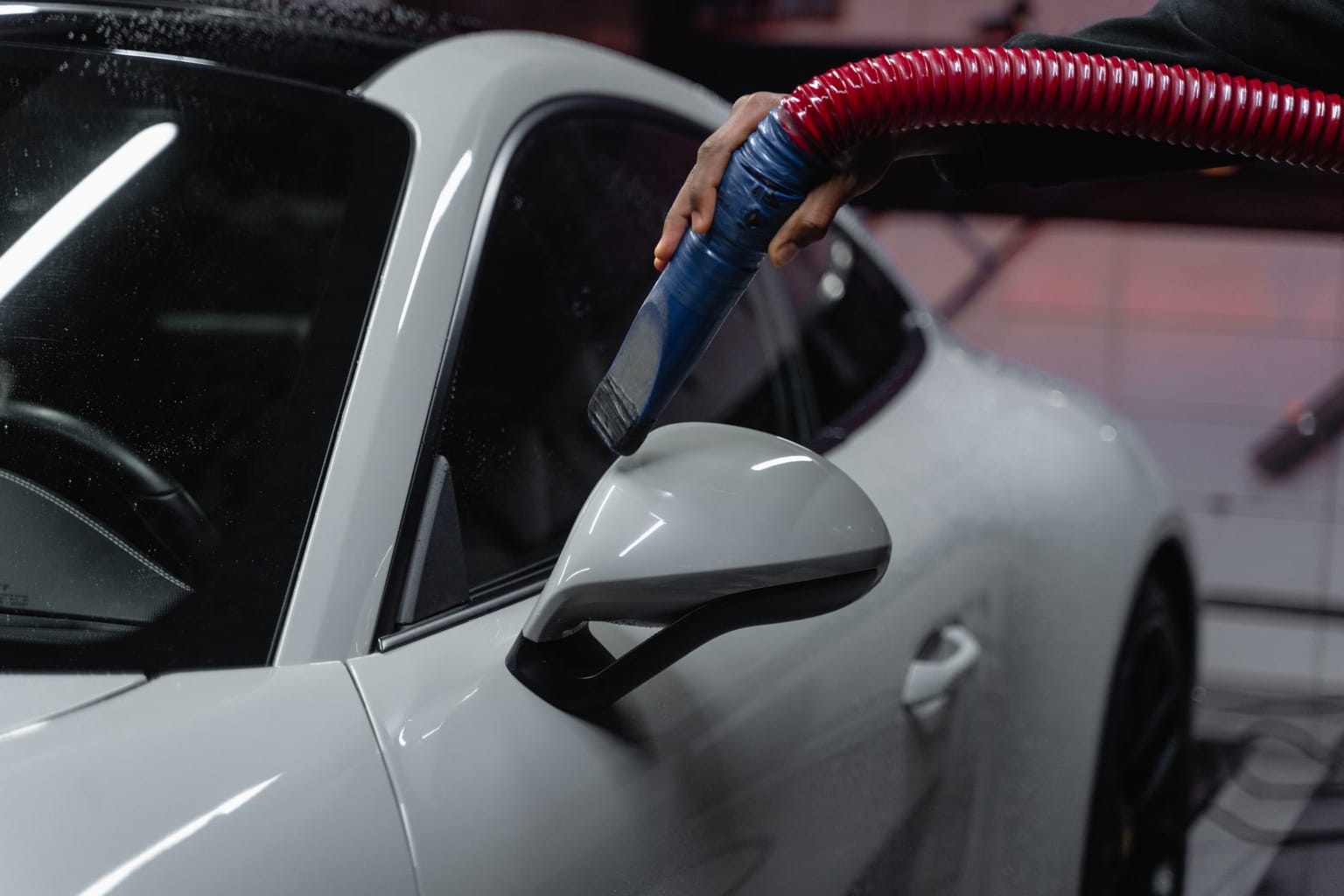
At first glance, detailing can look like a more thorough car wash. In reality, it's much broader care. The goal isn't only a clean car, but also protecting it, restoring it and keeping it looking good for years.
A car wash and detailing are not the same thing
A regular car wash deals mainly with the dirt you can see on the surface: dust, mud, bugs, road salt or grime from the wheels.
Detailing goes a lot further.
Professional detailing isn't just about washing the car. It looks at the condition of each surface, cleans it the right way, removes minor defects where that's possible and then protects it.
So the result is more than a cleaner car. Done properly, detailing can noticeably improve how your paint looks, extend the life of the materials in and on the car and make them easier to look after.
What exterior detailing can look like
The exact process always depends on the condition of the car and the services you order. Usually it comes down to four steps:
- A gentle hand wash. The aim is to remove dirt with as little risk of new scratches as possible. Poor washing causes a large share of the fine scratches that later show up clearly, especially in direct sunlight. Typical culprits are brush car washes, the automatic kind you'll find at many gas stations, and poor hand-washing technique.
- Chemical and mechanical decontamination of the paint. This removes contaminants that a normal wash often leaves behind, such as iron fallout (tiny airborne rust particles), tar and other deposits firmly bonded to the surface.
- Machine polishing. This step is for cars with damaged or tired paint, and studios usually list it as paint correction. Depending on the condition of the paint, it can remove or greatly reduce fine scratches, holograms and other imperfections. The paint gains gloss and depth and looks better overall.
- Surface protection. The options include wax, a synthetic sealant, a ceramic coating or paint protection film (PPF). Each one offers a different level of protection, lifespan and price.
Not every scratch can or should be removed completely, though. With deeper damage, too much paint would have to come off, and chasing a perfect result at any cost isn't the right approach. In that case, a local touch-up or repainting the damaged panel may be the better solution.
PPF differs from the other types of protection mainly because it adds a real physical layer on top of the paint. That layer can protect the paint from stone chips, minor scratches and other damage from everyday driving. It's most often applied to the most exposed parts of the car, or to the whole car.
Even a new car may not have perfect paint
A new car doesn't automatically mean flawless paint.
Before it's handed over to you, the car goes through production, transport, storage and preparation at the dealership. Fine scratches, holograms or other minor defects can appear during any of these steps.
That's why even a brand-new car may get a light polish before a ceramic coating or PPF goes on.
Protection works best on a surface that has been prepared perfectly beforehand.
Interior detailing is more than vacuuming
You can see a similar difference inside the car.
A basic interior clean often means vacuuming the carpets, wiping down the plastics and maybe cleaning the windows. Interior detailing goes much deeper – it can cover the seats, carpets, plastics, steering wheel, door panels, the gaps between trim pieces and other hard-to-reach places.
What matters most is the right method for each material.
Leather, for example, needs different care from fabric or Alcantara. The wrong products or overly aggressive cleaning can actually damage the surface.
That's why the cleaning may be followed by a protective treatment for individual materials.
Why the method matters
A large part of detailing isn't visible at first glance.
The difference often lies in the process, the products, the detailer's experience and the time they spend on your car.
Even a high-quality ceramic coating won't give a good result if the paint hasn't been prepared properly. And expensive products alone don't guarantee good work.
The biggest difference between two services may not be the brand of products, but the quality of the work itself.
Who detailing makes sense for
Detailing isn't only for new, expensive or sports cars. It can make sense for practically any car whose owner wants to look after it for the long term.
- With a new car, the main goal may be to protect the paint and interior before visible signs of use start to appear.
- With an older car, detailing can help restore its looks and remove some of the imperfections that have built up over the years.
- Before you sell, a well-prepared car looks better in photos and at viewings, and it tells a potential buyer that the owner took care of it.
How much does detailing cost?
Prices vary a lot. They depend on the size and condition of the car, the scope of the work, the products used and the experience of the particular studio.
Simpler care can mean a few hours of work. A full paint correction, a thorough interior and then applying protection can take several days.
That's why choosing a studio on price alone isn't ideal. Find out exactly what the service includes, what result you can expect and how much experience the studio has with that type of work.
How to recognize a good detailing studio
A good studio should be able to explain what it will do with your car and why. It should also give you a realistic idea of the result.
A deep scratch that goes all the way through the paint, for example, may not be safely removable by polishing alone, and a touch-up or a repaint has to follow.
A professional detailer doesn't promise the impossible. Instead, they recommend a solution that fits the actual condition of your car.
Photos of past work, customer reviews or a personal consultation can also help. For more tips, read how to choose the right car detailing studio.
Detailing as long-term care
Detailing makes the most sense as long-term care.
Proper washing, regular maintenance of protective layers and gentle interior cleaning can help keep a car in very good condition for many years.
And that's the main difference from a regular wash.
A wash deals with today's dirt. Detailing deals with the car as a whole – its looks, its protection and its ongoing care.
Published 13 August 2026 · 7 min read

The next stage of Detailero: developing the apps and reaching new customers
The past few weeks at Detailero were mostly about developing and fine-tuning the apps. Over the coming months, that work will be followed by a stronger focus on marketing, aimed at both studios and car owners. We want to use the winter to develop the platform further and to support interest in the services of the studios on board.
Ceramic coating for cars: what to really expect
A ceramic coating won't protect your paint from stone chips, and it won't do your washing for you. So what does it actually do, how long does it last and who is it for?
How often should you wash your car, and how do you do it right?
You can wash your car every week and still slowly ruin the paint. Technique is what counts, and some kinds of dirt shouldn't wait until the next wash.